STRATEGIC RESPONSE • FY2025-26
MARGIN
DEFENSE.
A techno-economic framework to counter Tariff Volatility, Energy Scarcity, and EU Compliance pressure.
INITIALIZING STRATEGIC FRAMEWORK 2026...
STRATEGIC RESPONSE • FY2025-26
A techno-economic framework to counter Tariff Volatility, Energy Scarcity, and EU Compliance pressure.
The era of labor arbitrage is over. With US duties stabilizing at 20% (down from a threatened 37%), Bangladesh faces stiff competition from "Near-Shoring" hubs like Mexico and Turkey. These competitors benefit from faster logistics, eroding the price advantage of Bangladeshi garments. To survive, factories must find margin elsewhere.
With chronic LNG shortages, factories are forced to run captive diesel generators. The math is brutal: Diesel costs $0.32/kWh, nearly triple the grid rate of $0.12/kWh. A factory running a dyeing line on diesel for 4 hours a day bleeds margin that no volume of orders can recover.
The EU Carbon Border Adjustment Mechanism (CBAM) phases in by January 2026. This is a non-tariff barrier that requires auditable energy traces for every garment. Manual logbooks will no longer be accepted. Factories that cannot digitally prove their efficiency will face tariff penalties or market exclusion.
CAPTIVE POWER COST
Cost per kWh on Diesel vs $0.12 on Grid.
DOWNTIME LOSS
Annual loss across RMG & Light Engineering.
Why imported automation fails the Bangladeshi SME context.
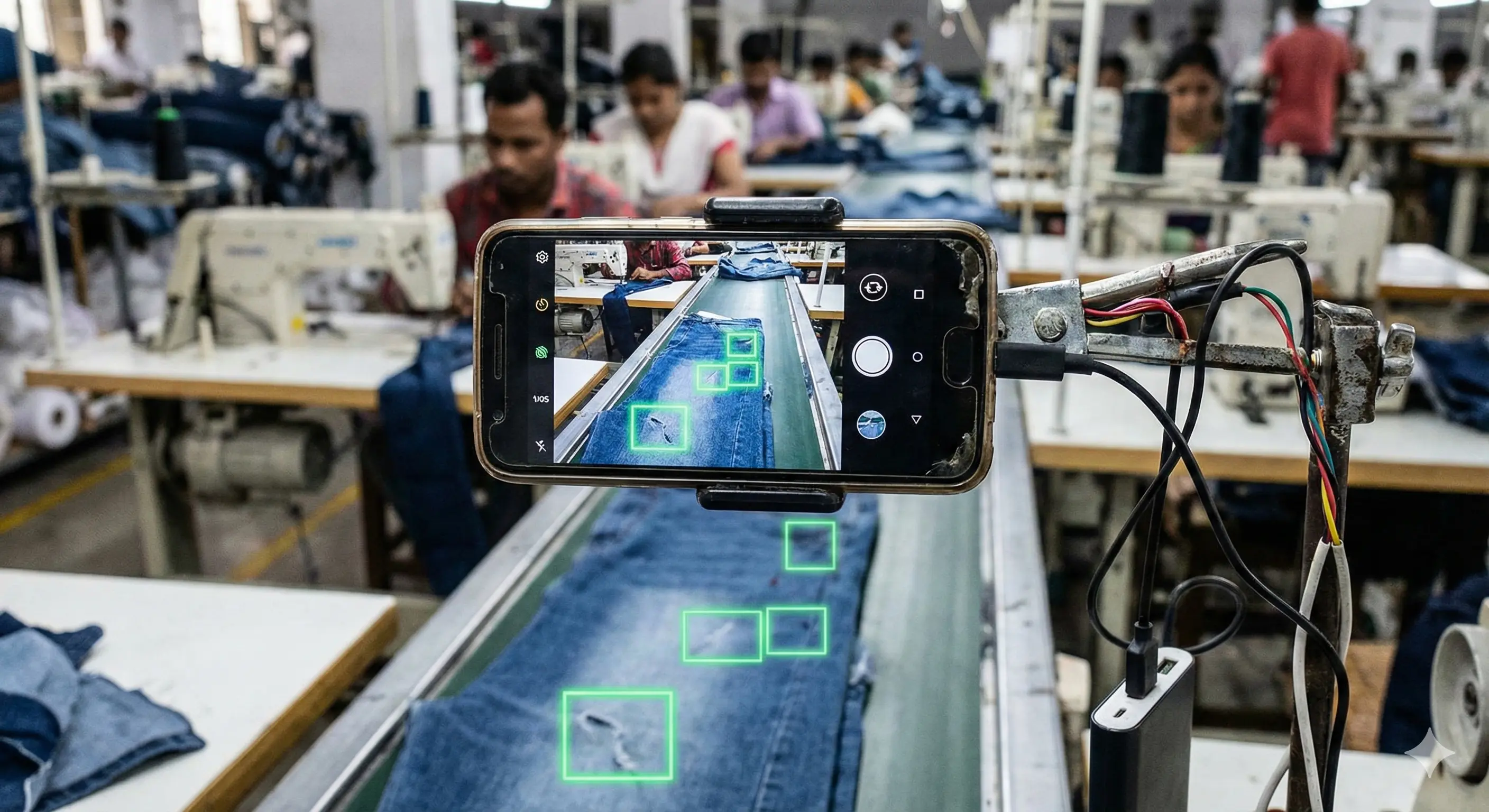
The market currently offers two extremes: prohibitively expensive hardware from China/Germany (KeyeTech, Kevision) or basic ERP software (Inovace, Coats) that lacks physical sensing. Industrial-AI.One occupies the "Retrofit" gap—deploying intelligence on existing machinery.
| METRIC | INDUSTRIAL-AI.ONE | IMPORTED AOI RIGS | LOCAL ERP / MES |
|---|---|---|---|
| CAPEX / Line | ~$150 (Retrofit) Uses existing Phones/Pis |
$12,000+ (Replace) Requires new machinery |
$500+ (Software) No physical sensors |
| Inference Model | Edge-Native AI MicroViT + TS2Vec (Local) |
Proprietary Cloud Black-box algorithms |
Manual Input Human data entry |
| Data Sovereignty | ✔ On-Premise Designs never leave factory |
✘ Vendor Cloud IP risk for designs |
✘ Cloud Hosted General server risk |
| Real-Time Action | ✔ <200ms Stop Intervenes before defect |
✔ <100ms Stop High speed, high cost |
✘ Post-Mortem Analysis after shift |
| Compliance | ✔ Automated DPP Parquet logs for EU |
✔ Proprietary Vendor locked formats |
✘ Analog/Manual Not audit-ready |
While RMG is the economic anchor, this architecture is sector-agnostic. We address the broader "Smart Bangladesh 2041" industrial mandate by applying our core technologies (Vision, Time-Series, Vibration) to other key sectors.
Hubs: Dholaikhal, Bogra
Lathes and CNC machines suffer from tool wear. FailPredict prevents spindle damage and improves tolerance precision, reducing scrap in automotive spare parts production.
Hubs: Lalbagh, Tongi
Injection molding is energy-intensive. PowerGuard is critical for peak-shaving to manage high-load electrical costs during the heating cycles of extruders.
Hubs: Pran-RFL, City Group
Cold chain integrity. FailPredict monitors compressor health in refrigeration units to prevent failure and spoilage of perishable goods.
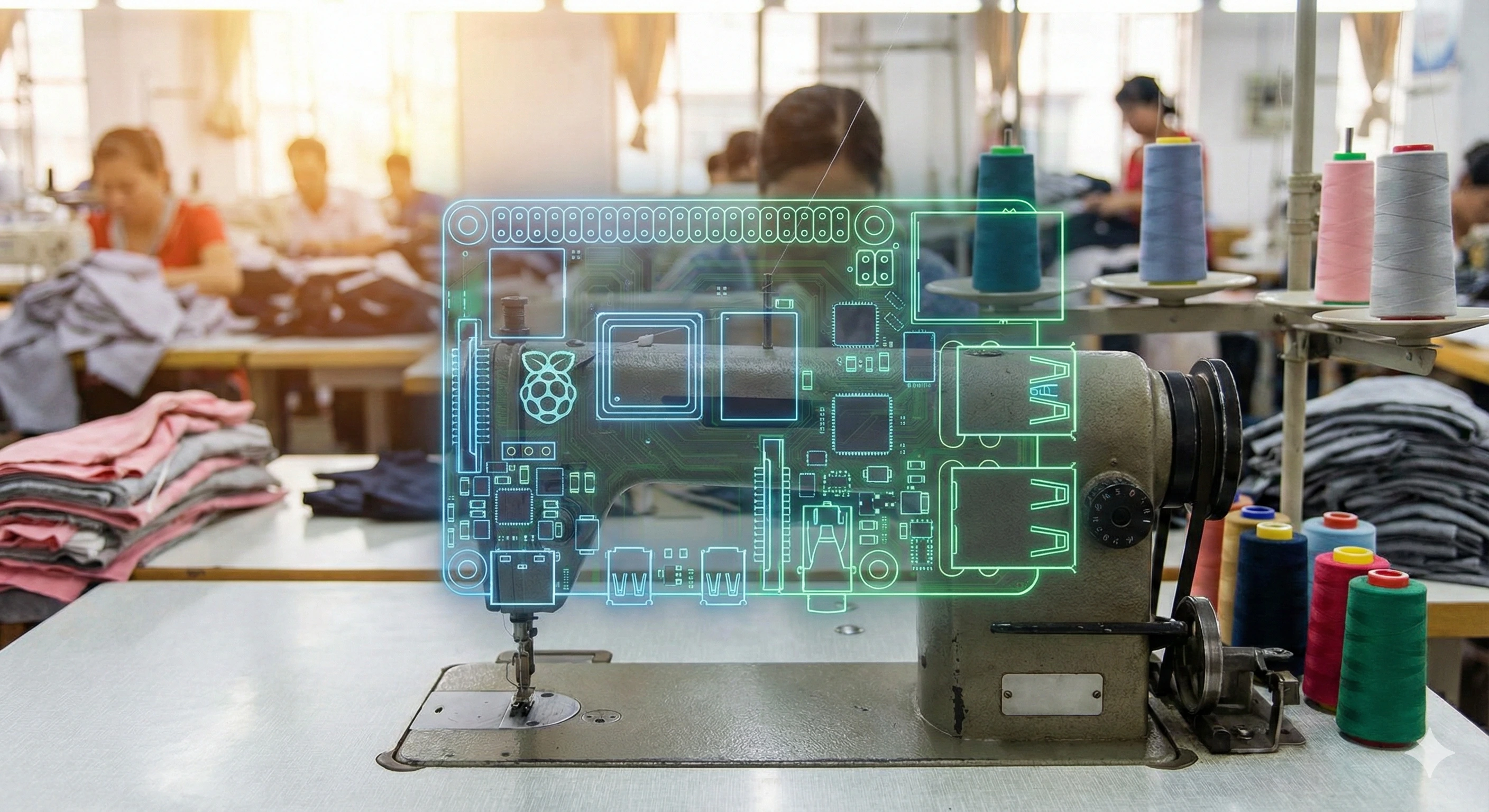
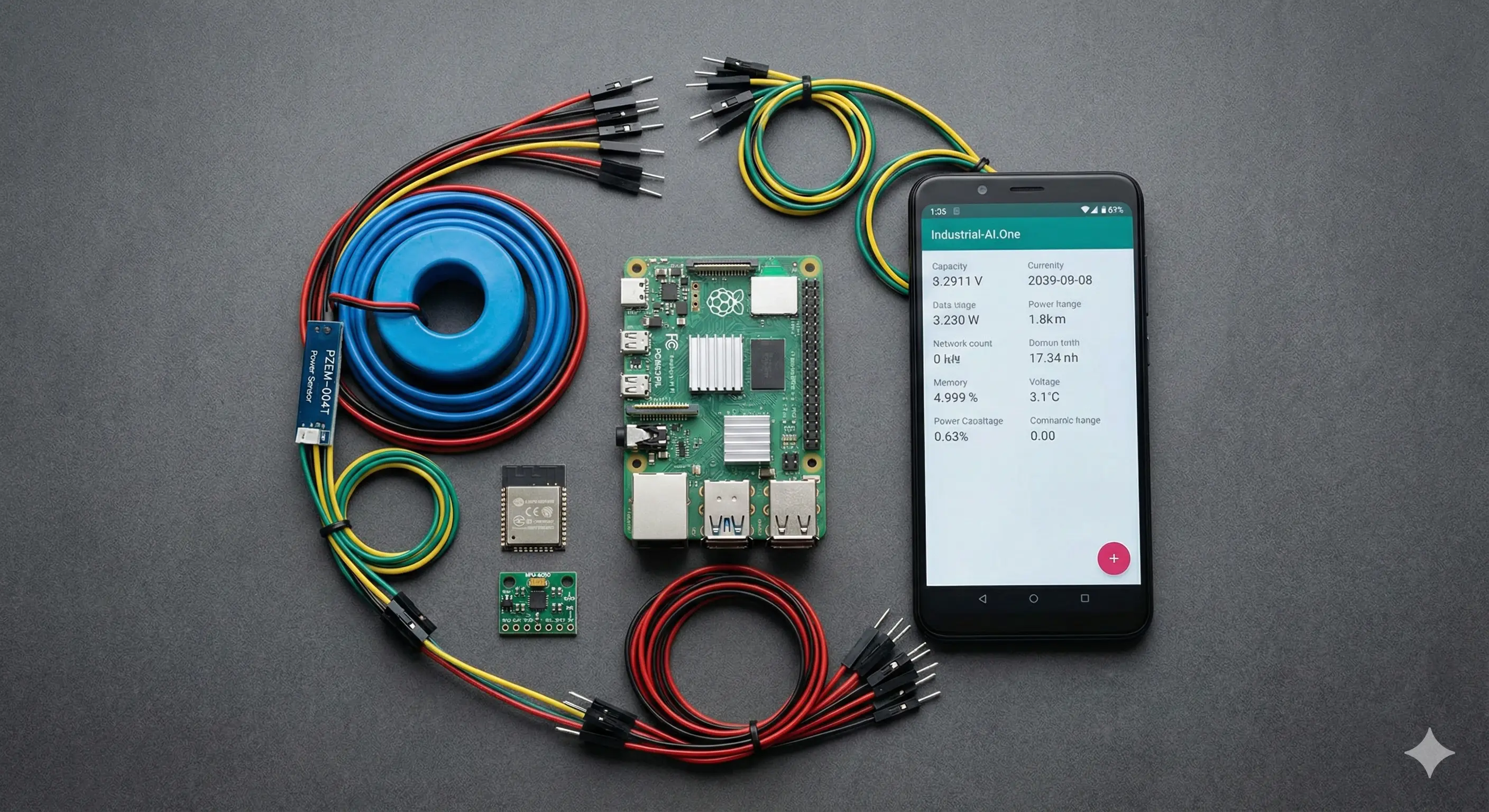
Our architecture utilizes the Raspberry Pi 5 (quad-core 2.4GHz) and recycled Android Smartphones (Snapdragon 778G) as local compute nodes.
Why Edge? Streaming HD video to the cloud incurs latency (>3000ms) that is too slow for high-speed fabric inspection. By running 8-bit quantized models locally, we achieve <200ms latency.
PAYBACK PERIOD
YEAR 1 ROI